
- 0 Comments
- By admqdwss3
- Uncategorized
Many DeFi users think wallet security begins when a transaction appears for approval. In practice, the risk often starts earlier, with a token allowance granted days or months before the user remembers it. A wallet may hold no obvious danger in its transaction history while still giving a contract broad permission to move assets later. That is why token approval management, transaction simulation, and careful wallet installation belong to the same security conversation.
The common mental model is simple: inspect the amount, click confirm, and move on. The more accurate model is a chain of permissions, contract behavior, user intent, and timing. Transaction simulation can expose what a proposed action is likely to change, but it cannot prove that every future interaction will be safe. Approval management can reduce standing exposure, but revoking an allowance is itself an on-chain transaction with costs and execution risks. Good DeFi security is therefore less about finding one perfect tool and more about reducing uncertainty at each decision point.
Myth One: A Token Approval Is the Same as a Token Transfer
It is not. On Ethereum-compatible networks, many tokens use an allowance mechanism. A wallet owner authorizes a spender, usually a smart contract, to move up to a specified quantity of that token. The approval does not necessarily move funds immediately. Instead, it creates a continuing permission that the designated contract may use later, often when the user swaps, deposits, stakes, or interacts with another protocol.
This distinction explains why an apparently harmless interaction can create future exposure. A user might approve a decentralized exchange for a large amount, complete one small swap, and assume the relationship ended there. Unless the allowance is reduced or removed, the permission may remain. The contract may never misuse it, but the risk surface persists if the contract is later compromised, upgraded in an unexpected way, or impersonated by a malicious interface.
Unlimited approvals are convenient because they avoid repeated approval transactions. They can also be rational for frequent users who understand the contract and accept the trade-off. Convenience, however, is not free: it exchanges fewer future prompts for a larger standing authorization. A limited approval narrows potential loss but may require another transaction when the allowance is exhausted. Neither choice is universally correct; the relevant question is whether the saved friction justifies the additional permission.
Myth Two: Revoking Every Approval Eliminates DeFi Risk
Revocation is useful, but it is not a complete security strategy. A revoke transaction changes an existing allowance; it does not undo a transfer that already occurred, repair a compromised private key, or make a malicious website trustworthy. It also does not necessarily address every permission model used by every application. Some systems rely on signatures, permits, operator roles, or other contract-specific mechanisms rather than a conventional allowance alone.
There is also a practical boundary. Revoking an approval requires an on-chain transaction and therefore exposes the user to network fees, congestion, and the possibility of selecting the wrong contract or token entry. On a busy US trading day, when markets move quickly and gas conditions change, a user who treats revocation as an emergency reflex may make a hurried mistake. The safer approach is to identify which permissions are active, determine whether the spender is still needed, and then revoke deliberately.
A useful rule is to treat approvals as an inventory rather than a one-time cleanup task. Review permissions after using unfamiliar applications, before moving substantial assets, and whenever a protocol changes its interface or contract structure. Pay special attention to approvals for assets that are valuable, liquid, or held in significant quantity. The objective is not a perfectly empty approval list; it is a permission set that matches current intent.
Myth Three: Transaction Simulation Predicts the Future
Simulation is best understood as a conditional preview. A wallet can evaluate a proposed transaction against a particular blockchain state and estimate effects such as tokens leaving the wallet, assets being received, or an approval being created. This is powerful because raw contract data is difficult for most people to interpret. A simulation translates an opaque request into a more meaningful question: “If this call succeeds under these conditions, what changes should I expect?”
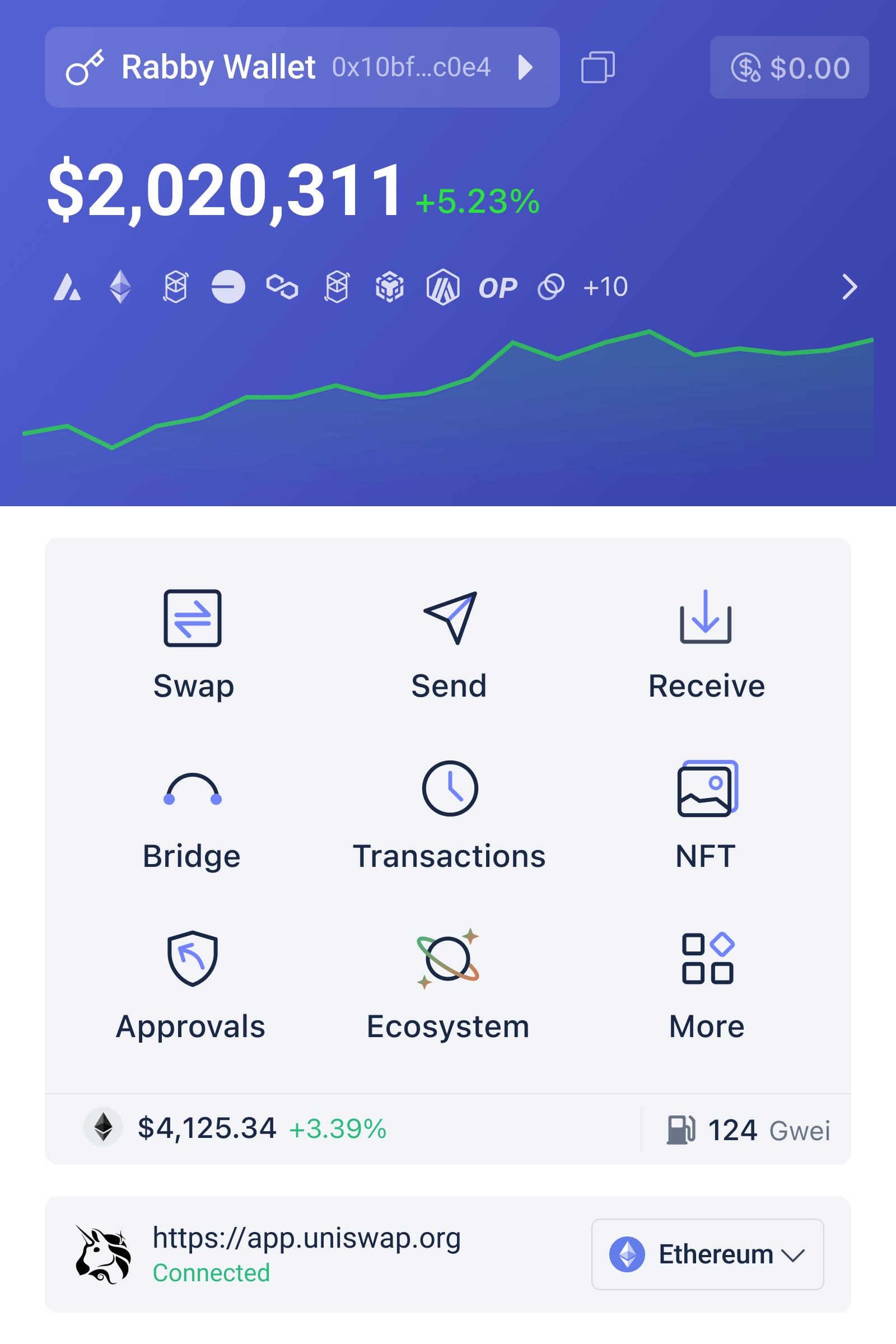
That question is materially better than simply asking whether the transaction came from a familiar website. A polished interface can be deceptive, while a transaction effect may reveal an unexpected spender, an unfamiliar asset transfer, or a mismatch between the user’s stated goal and the contract call. For someone installing a browser wallet, using the official setup path is an important first step; readers evaluating that process can review the rabby extension download information before connecting to DeFi applications.
Yet simulation has limits. It depends on the state being examined, the node providing the execution environment, and the transaction parameters supplied at that moment. A contract may behave differently if market prices move, a deadline passes, liquidity changes, or another transaction alters state first. Some interactions also depend on external systems that are difficult to represent fully in a local preview. A successful simulation means the transaction appears executable under the tested conditions. It does not mean the protocol is economically sound or the counterparty is honest.
This is the crucial conceptual distinction: simulation addresses execution risk more directly than governance, economic, or identity risk. It may show that a swap will send one token and return another, but it cannot by itself establish that the exchange rate is fair, that the token is legitimate, or that a protocol’s administrators will act responsibly. Security tools reduce specific uncertainties. They do not collapse all uncertainty into a green light.
Myth Four: A Familiar DeFi Brand Makes Every Prompt Safe
Brand recognition is weak evidence when the transaction itself is unusual. Attackers can imitate websites, purchase misleading search advertisements, compromise social accounts, or exploit confusion between similarly named domains. Even a genuine front end can present a user with a transaction that deserves scrutiny if a contract address, chain, asset, or action does not match expectations.
Users should compare the intended action with the wallet’s interpreted result. If the goal is to deposit one asset, an approval followed by a deposit may be coherent. If the wallet reports an unexpected operator permission, a broad transfer capability, or a recipient unrelated to the task, stopping is rational. The point is not to demand that every user read bytecode. It is to notice contradictions between purpose and effect.
Chain selection matters as well. An address may look familiar across networks while representing different deployments, tokens, or risks. A user who intends to interact on one network but signs on another may create an approval that is irrelevant to the original plan yet still costly or confusing to unwind. Simulation and approval review are strongest when paired with basic operational discipline: verify the network, verify the asset, inspect the spender, and avoid signing when the explanation is unclear.
A Practical Framework for Safer Signing
Before approving a token, ask what the spender needs and for how long. A limited allowance is generally easier to bound than an unlimited one, although it can create additional transactions. Before signing a later interaction, check whether the displayed result matches the intended trade or deposit. Afterward, record what permission was granted rather than relying on memory.
When reviewing a transaction, separate four questions:
- What is the action? Is it an approval, transfer, swap, deposit, withdrawal, or permission change?
- Who can act afterward? Identify the spender or operator created by the transaction.
- What is the maximum exposure? Consider the allowance, wallet balance, and assets controlled by the permission.
- What remains uncertain? Note price impact, contract upgrades, external calls, network state, and the possibility of a deceptive interface.
This framework produces a better decision than a simple “safe” or “unsafe” label. It also supports proportionality. A small experimental interaction with a disposable wallet may justify a different risk tolerance from a long-term wallet holding retirement savings or business funds. In the United States, where users may manage assets across several chains and applications, separating a highly active wallet from a storage-oriented wallet can reduce the consequences of one mistaken approval.
Segmentation does not make a wallet invulnerable. A compromised seed phrase, malicious browser extension, or fraudulent signature can bypass many layers of caution. Hardware wallets can protect key material while still allowing a user to approve a harmful contract call. Multisignature arrangements can reduce single-person failure but introduce coordination and recovery complexity. Each measure changes the risk profile; none replaces transaction comprehension.
What to Watch as Wallet Security Evolves
The likely direction of wallet design is toward more interpretable permissions: clearer spender names, explicit allowance scopes, simulations that describe asset changes, and warnings that distinguish an approval from a transfer. If these systems become more accurate and consistent, users may spend less effort deciphering raw calldata and more effort evaluating economic and contractual risk.
The unresolved issue is standardization. DeFi applications do not all express permissions or actions in the same way, and a wallet’s interpretation can be incomplete when contracts are complex or state changes rapidly. Users should therefore treat improved previews as decision support, not certification. The strongest signal to watch is not whether a tool displays a confident color or label, but whether it explains the underlying action, identifies uncertainty, and makes it easy to stop.
Frequently Asked Questions
Should I always use limited token approvals?
Limited approvals reduce the amount a spender can draw under that allowance, so they are often a sensible default for unfamiliar or infrequently used applications. Unlimited approvals may reduce repeated transactions for a trusted, frequently used application, but they create greater standing exposure. The choice should reflect the asset’s value, the contract’s trust assumptions, and your willingness to review permissions later.
Does a successful transaction simulation mean I can safely sign?
No. It means the transaction appears to produce particular effects under the simulated conditions. It does not prove that the website is authentic, the token is valuable, the contract is free of economic weaknesses, or future state changes will not alter the outcome. Use simulation to detect mismatches and unexpected effects, then apply independent judgment.
How often should DeFi users review token approvals?
Review them after interacting with unfamiliar protocols, before consolidating funds, and whenever an application or contract deployment changes. Users with many active positions may benefit from a regular review schedule. The aim is to remove permissions that no longer serve a clear purpose while avoiding rushed revocations during periods of congestion or market stress.
The most durable security habit is not blindly revoking everything or trusting every simulation. It is learning to distinguish a one-time transaction from a continuing permission, an execution preview from a guarantee, and a familiar interface from a verified intent. Once those distinctions become routine, token approval management turns from an obscure wallet chore into a practical method for controlling DeFi exposure.