
- 0 Comments
- By admj6gmsf
- Uncategorized
Buy Ammunition for Sale Now – In Stock & Ready to Ship
Whether you’re heading to the range for some weekend practice or stocking up for a hunting trip, finding the right ammunition for sale means getting reliable rounds that feed, fire, and cycle exactly as your firearm expects. Each cartridge combines a primer, propellant, and projectile into a single, ready-to-use package, so you can simply load your magazine and focus on your shot. Quality ammo offers consistent accuracy and .17 HMR Ammo for Sale dependable ignition, giving you confidence in every trigger pull. Choose the correct caliber and bullet type for your firearm to ensure smooth performance and the best results, every time you pull the trigger.
What Types of Cartridges Are Actually Available Right Now?
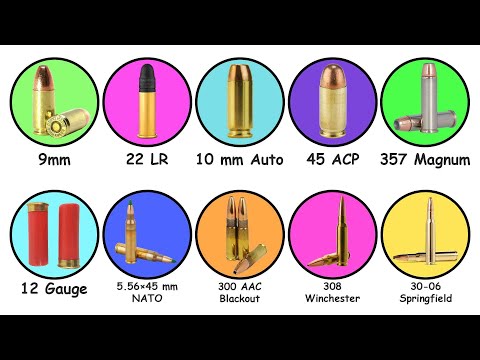
Walking into a well-stocked shop today, you’ll find **common handgun cartridges** like 9mm Luger, .45 ACP, and .40 S&W stacked deep on shelves, alongside **rifle ammunition** such as .223 Remington, .308 Winchester, and 6.5 Creedmoor. For hunters, **big-game rounds** like .30-06 Springfield and .300 Win Mag remain steady, while **varmint and precision loads**—.22-250 and .243 Winchester—are still cataloged. Shotgun shells in 12, 20, and .410 gauge cover both birdshot and buckshot. Less common but available via specialty dealers: .338 Lapua, .450 Bushmaster, and even obsolete rounds like .30-40 Krag, though often in limited runs. Online retailers list **in-stock filters** so you can see primers, brass, and loaded rounds for these calibers updated hourly. The real variety .17 WSM Ammo for Sale hinges on batch production—popular calibers sell out fast, but niche options arrive monthly from small manufacturers.
Common Calibers You’ll Find in Stock and What They’re Best For
When browsing current ammunition for sale, the most prevalent shelf-stable calibers are 9mm Luger, .223 Remington/5.56 NATO, .308 Win, and 12-gauge shotgun shells. 9mm is your pragmatic choice for compact defensive pistols and high-capacity magazines, offering manageable recoil with superior terminal performance from modern hollow points. .223/5.56 excels for varmint control, tactical training, and low-recoil home defense due to its flat trajectory and light recoil. .308 Win dominates for medium-to-large game hunting and precision long-range steel work, providing heavy bullet energy at distance. 12-gauge shells, from birdshot to slugs, cover everything from upland birds and skeet to breaching and deer hunting. Common calibers stock availability usually favors these four because they feed the widest array of firearms and match general-purpose shooting needs.
Q: What is the best all-purpose caliber for a new shooter aiming to buy ammo today?
A: 9mm Luger remains your best all-purpose buy—it is almost always in stock, works in compact and full-size pistols, and balances cost, recoil, and stopping power for self-defense and range practice.
Specialty and Premium Loads: Match, Hunting, and Self-Defense Options
Beyond standard ball ammo, buyers can select premium self-defense ammunition engineered for terminal performance. Match loads, such as Sierra MatchKing or Berger hybrids, use tight-tolerance projectiles for sub-MOA accuracy in competition rifles. Hunting rounds like Federal Premium specialty sports & supply Trophy Copper or Hornady ELD-X offer controlled expansion and deep penetration for ethical kills on game. Self-defense options, including Speer Gold Dot or Federal HST, feature bonded cores and hollow-point cavities that reliably expand in ballistic gel while defeating clothing barriers. These specialty loads cost more per round but deliver predictable terminal ballistics, consistent velocity, and reliable feeding—critical factors when accuracy or stopping power directly impacts the outcome.
- Match loads prioritize bullet concentricity and consistent seating depth for 7.62×39 Ammo for Sale precision shooting.
- Hunting options use monolithic or bonded projectiles to retain weight at impact velocities.
- Defensive rounds are tested in calibrated gelatin 7.62x54R Ammo for Sale to verify expansion across barrel lengths.
- Premium brass cases are annealed and re-sized for multi-use reloading potential.
How to Match the Right Bullet Grain Weight to Your Firearm’s Twist Rate
When browsing ammunition for sale, matching bullet grain weight to your firearm’s twist rate ensures stabilizing accuracy. Check the barrel’s twist (e.g., 1:7, 1:9) via the manufacturer or manual: faster twists (1:7) stabilize heavy grain bullets (62–77gr), while slower twists (1:12) favor light grain (40–55gr). Mismatched loads cause keyholing or poor precision. For ammunition for sale, read the box’s stability formula or use the Miller stability calculator before buying bulk. Test 3–5 grain weights at the range, observing group size. A 1:8 twist suits a middle range (55–69gr), offering flexibility. Always prioritize twist-matched options from ammunition for sale listings, as grain weight selection directly impacts velocity, trajectory, and terminal performance in your specific barrel.
Understanding Bullet Weight vs. Velocity for Better Accuracy
When you’re picking ammo, understanding bullet weight vs. velocity for better accuracy is all about balance—heavier grains generally fly slower but resist wind drift, while lighter bullets cut fast flat trajectories but get pushed around more. Your barrel’s twist rate decides which weight stabilizes, but the velocity loss from a heavy slug can actually tighten groups at mid-range because it resists turbulence. Conversely, a too-light bullet launched too fast might tumble or wobble. The sweet spot is where your twist rate stabilizes the bullet *and* the velocity keeps it subsonic-ish or in a consistent regime. Play with two weights of the same caliber, chronograph them, and see which grouping shrinks. Understanding bullet weight vs. velocity for better accuracy isn’t about raw speed—it’s about matching momentum to your barrel’s rhythm.
Q: Does a heavier bullet always mean more accurate? No—if your twist rate can’t stabilize it, even a perfect BC bullet will keyhole. Lighter bullets in a fast twist can over-stabilize and encounter weird drag. Test both and trust the target, not the label.
Why Barrel Twist Rate Dictates Which Rounds Will Group Tightly
The rifling’s spin rate physically stabilizes a projectile in flight, and that spin interacts directly with bullet length and weight. A slow twist (1:12) cannot impart enough rotational force to stabilize a long, heavy bullet, causing tumbling and poor groups. Conversely, a fast twist (1:7) over-stabilizes a light, short round, sometimes creating inconsistent drag and erratic accuracy. Matching bullet grain to twist rate ensures the gyroscopic stability factor lands in the optimal zone—typically 1.5 to 2.0—where the projectile flies point-forward without yaw or pitch. The wrong combination produces keyholing or dispersion, regardless of cartridge quality. Always check your barrel’s twist specification before buying bulk ammunition, because the rifling pitch is the hard limit on which grain weight can ever group tightly.
FMJ vs. JHP vs. Soft Point: Which Projectile Design Solves Your Problem?
When you’re buying ammunition for sale, the projectile design dictates your outcome. Full metal jacket (FMJ) solves practice and training problems—its hardened core and copper jacket feed reliably, reduce barrel fouling, and offer the most affordable rounds for high-volume shooting. If your problem is self-defense, jacketed hollow points (JHP) are the answer: they expand dramatically on impact, creating a larger wound channel and reducing over-penetration risk in home-defense scenarios. For hunting medium or large game, soft point (SP) rounds deliver controlled expansion, deep penetration, and reliable energy transfer through thick hide and bone. Your choice hinges on whether you prioritize cost, stopping power, or barrier performance—not on brand loyalty. Stop overthinking; match the projectile to your immediate task, and buy the ammunition that solves that specific issue today. FMJ saves you money at the range. JHP and SP save your life or your hunt when it counts.
Choosing Between Full Metal Jacket for Practice and Hollow Points for Stopping Power
When buying ammunition for sale, the core decision between full metal jacket for practice and hollow points for stopping power hinges on purpose, not price. FMJ rounds feed reliably and cause minimal barrel fouling, making them ideal for high-volume range drills where penetration through paper or steel is the only requirement. Hollow points, by contrast, expand upon impact in soft tissue, transferring energy rapidly and reducing over-penetration risks—a critical factor for defensive carry. However, practicing exclusively with FMJ can mask recoil and expansion differences, so shooters should fire a few magazines of hollow points to confirm zero and function. For concealed carry, reserve FMJ strictly for training, while 7.62×51 Ammo for Sale loading magazines with hollow points for actual protection.
Choose FMJ for affordable, reliable practice; choose hollow points for controlled expansion and stopping power in defensive scenarios.
When to Use Soft Point or Bonded Bullets for Reliable Expansion on Game
Choose soft point or bonded bullets when hunting thin-skinned game like deer or antelope where reliable expansion must occur at moderate to high impact velocities. Soft points expand rapidly on tissue, ideal for broadside lung shots, but may fragment on heavy bone, reducing penetration. Bonded variants retain core-jacket integrity, making them the superior choice for angled shots or tougher game like elk, where deeper penetration is non-negotiable. If your ammunition for sale selection includes both, prioritize bonded for dense muscle mass and soft points for lighter frames. Avoid these designs for dangerous game requiring monolithic construction.
Q: When should I pick bonded over standard soft point?
A: Use bonded when shots may strike shoulder bone or when hunting larger game exceeding 400 pounds, ensuring the bullet holds together for consistent wound channels.

How to Spot Reliable Ammo Packaging and Lot Numbers Before You Buy
Before buying ammunition, inspect the packaging for intact seal tape and a crisp, legible lot number, usually stamped or printed on the flap, side, or box base. A reliable lot number includes a mix of letters and digits, often with a two-digit year code; avoid boxes with smudged, missing, or hand-corrected numbers. Check that the caliber, bullet weight, and velocity match the label exactly, and that the primer sealant or crimp appears uniform across the case mouths. Look for consistent pressure signs on the box, like indentations from stacked rounds, which suggest rough handling. Cross-reference the lot number with the manufacturer’s recall list if you have signal; a clean match is a strong indicator. Reject any carton with faded ink or a torn outer sleeve, as moisture or age can degrade powder performance. Even a perfect lot number doesn’t guarantee ballistic uniformity, but a clean, legible stamp does show the factory’s quality-control discipline. Finally, buy from a seller who lets you inspect the actual box, not a shrink-wrapped display, to verify the code yourself.
What a Lot Number Tells You About Consistency and Quality Control
A lot number is your fingerprint into a batch’s manufacturing history. It tells you that every cartridge sharing that code came from the **same production run and identical component lots**, meaning powder charge, bullet weight, and case dimensions were controlled under one set of machine calibrations. If you find two boxes with different lot numbers, expect subtle variations in velocity or point of impact — even from premium brands. For a handloader or competitive shooter, sticking to one lot number guarantees repeatable zero and consistent chamber pressure. Conversely, a mismatched lot number on repackaged ammo signals poor quality control, as reputable manufacturers keep batches segregated until final inspection and ballistics testing.
Signs of Proper Storage: Avoiding Corroded Cases and Duds
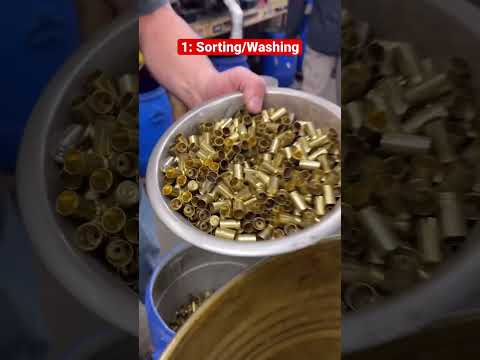
Before you hand over cash for ammunition for sale, give the box a quick once-over for **signs of proper storage**. Corroded cases—look for green crust, white fuzz, or dark spots on brass—mean moisture got in, which can turn rounds into duds. Skip any box with a musty smell or rust-colored residue on the rims. Also, check the primer; if it looks cratered or discolored, that’s a red flag. A good retailer stores ammo in a dry, climate-controlled area, and you can often tell by the crisp, clean condition of the cardboard and the shine of the cases.
- Green or white corrosion on case mouths signals poor humidity control.
- Dented or crushed primers can indicate rough handling, not necessarily duds, but be cautious.
- Dark, tarnished cases suggest long-term water exposure—pass on those.
- Cards with intact, non-bloated packaging usually mean the rounds stayed dry.
How Bulk Purchasing Saves You Money Without Sacrificing Performance
When you buy a case of 500 rounds instead of five boxes of 100, you’re paying for the projectile, powder, and primer—not the cardboard 7mm PRC Ammo for Sale and shelf restocking. That per-round drop often hits 15–25% with the exact same lot number, meaning your zero stays consistent and your groups don’t open up. You’re not downgrading to steel-case or remanufactured loads; you’re just buying the same premium ammunition in a volume that lets the retailer pass on their own savings. For a weekend shooter who burns through 200 rounds a month, one bulk order covers two and a half months of practice, and the freight cost averages into the savings if you order with a friend or a club. *“Does bulk buying affect accuracy?”* No—the ammunition is identical; only the packaging changes. You keep performance, drop cost, and never worry about running dry at the range.
Calculating Cost Per Round for Range Sessions vs. Defensive Stashes
Calculating cost per round reveals the true financial divide between range sessions and defensive stashes. For practice, you prioritize the lowest price per cartridge, often buying bulk FMJ to burn through hundreds of rounds weekly. However, defensive stash cost per round demands a different calculation, factoring in premium JHP reliability and terminal performance, not just shelf price. While range ammo might average 25 cents per round, your 5.7x28mm Ammo for Sale defensive stash might hit 60 cents, yet you only need 50–100 rounds annually. The real math is total expenditure: a 500-round range box at $125 versus a 50-round defensive box at $30. Bulk purchasing drops range cost per round drastically, freeing budget for that premium defensive magazine without compromising either category’s effectiveness.
Steel Case vs. Brass Case in Bulk: Trade-Offs in Price and Reliability
When buying ammunition for sale in bulk, the trade-off between steel and brass cases centers on cost per round versus long-term firearm reliability. Steel cases typically run 20–30% cheaper, making them ideal for high-volume practice where immediate function matters more than component longevity. However, steel’s harder outer layer creates more bolt wear and offers less consistent neck tension, which can occasionally cause extraction failures in tight chambers. Brass, while pricier upfront, expands to seal the chamber better, reduces fouling, and remains reloadable—lowering your effective cost over multiple firings. For defensive or competition loads, brass’s superior Ammo Cans & Storage for Sale reliability justifies the premium, while steel shines for blasting through hundreds of rounds at the range.
Q: Is steel case in bulk ever a smarter buy than brass for everyday shooting?
A: Yes, if you shoot over 1,000 rounds monthly and clean your gun regularly, steel’s savings add up fast—but only if your firearm cycles it reliably. Test a small batch first; if no failures occur, bulk steel is a sound financial move.

What’s the Ideal Quantity to Keep on Hand for Your Typical Shooting Habits?
The ideal quantity to keep on hand hinges entirely on your documented shooting frequency, not guesswork. For a casual weekend shooter, 500 to 1,000 rounds per caliber covers two to three months of range sessions without wasteful overstock. If you dry-fire weekly and run live-fire drills bi-monthly, scale that to 2,000 rounds, ensuring you always have a buffer before the next ammunition for sale purchase. Competitive shooters or those training for self-defense should maintain 5,000 rounds minimum, as consistent practice burns through stock rapidly. The golden rule: buy ammunition for sale only to replace what you fire, keeping a 20% surplus above your monthly average to absorb price fluctuations and availability gaps. Count your spent brass or 5.56 Ammo for Sale log your rounds—then set that number as your restock trigger, never dipping below your comfort floor.

Estimating Monthly Reserves for Casual Target Shooting vs. Competitive Use
For casual target shooting, estimating monthly reserves boils down to a simple baseline: roughly 200–400 rounds per range session, multiplied by your weekly visits. If you shoot twice monthly, that’s 600–800 rounds—enough to sustain plinking without panic-buying. Competitive use demands far more aggressive math. A single USPSA or IPSC match can burn 400–500 rounds, and serious competitors practice 3–4 times weekly, pushing monthly reserves to 2,000–3,000 rounds minimum. The key is matching reserve volume to your competitive cadence, not just your hobby frequency. For casual shooters, keep a two-month cushion (1,200–1,600 rounds) against shipment delays. For competitors, maintain a three-month buffer (6,000–9,000 rounds), because match schedules and dry-fire drills escalate consumption unpredictably. Never let a casual estimate bleed into competitive planning—it leaves you short on match day.
| Shooting Type | Monthly Reserve Estimate | Buffer Strategy |
|---|---|---|
| Casual Target | 600–800 rounds (2 sessions) | 1.5–2 months stocked |
| Competitive Use | 2,000–3,000 rounds (weekly practice + match) | 3 months stocked |
Setting a Minimum Stock Level for Essential Calibers You Depend On
To avoid disruption when you need to shoot, set a minimum stock level for essential calibers based on your monthly consumption and resupply frequency. First, calculate how many rounds you fire each month for your primary defensive or competition calibers, excluding practice loads you can substitute. Next, multiply that monthly figure by the typical lead time—in weeks—for your preferred ammunition source, then add a 20% safety margin for shortages or price spikes. For example, if you burn 200 rounds monthly and restock every four weeks, your floor is 240 rounds. Once you hit that number, place an order immediately, even if no sale is active. This rule prevents panic-buying at inflated prices and guarantees you never fall below a usable reserve. Review the floor quarterly, adjusting for changes in your shooting schedule.